
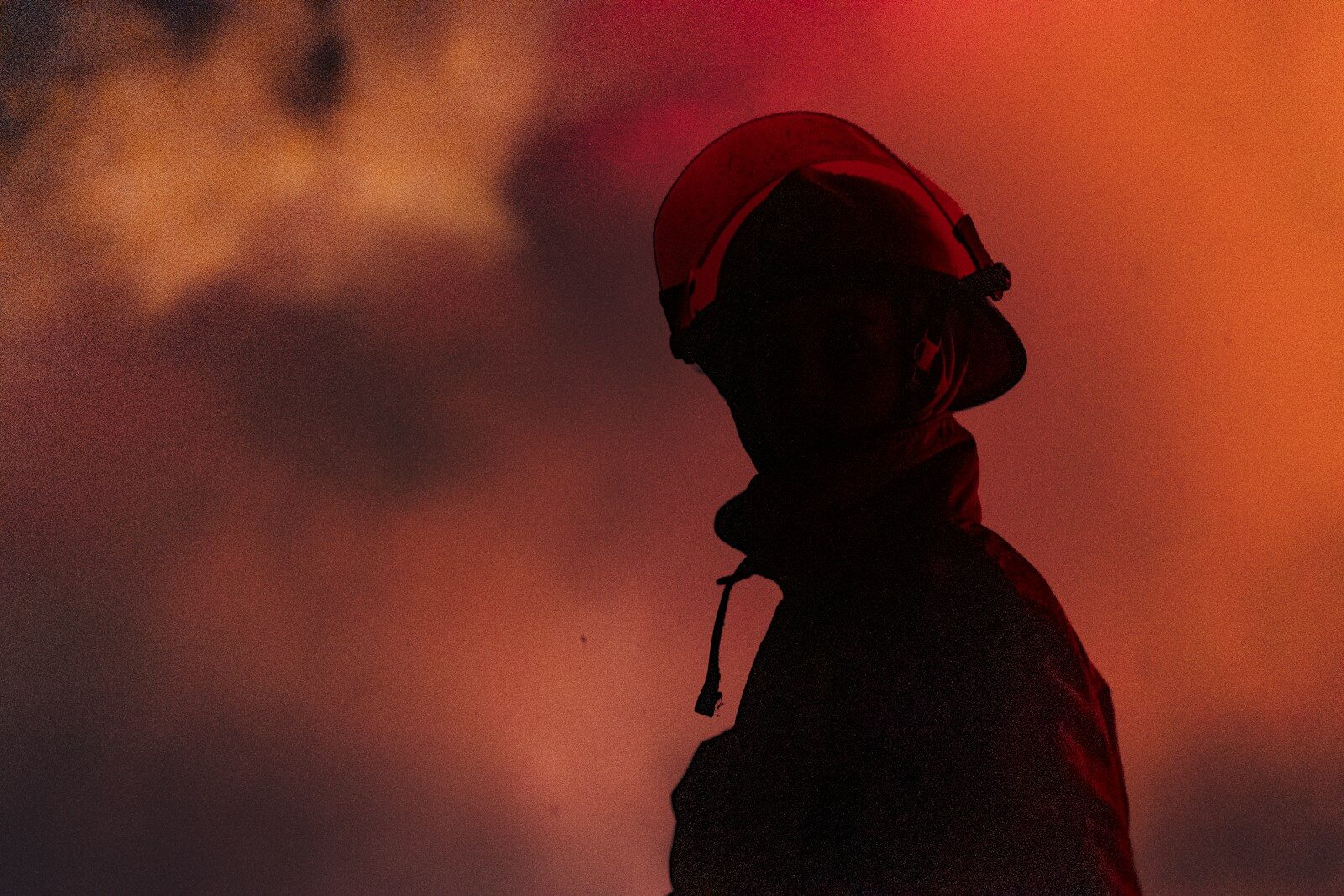
If you are a firefighter, police officer, or paramedic struggling with addiction, you are far from alone. First responders face some of the highest rates of post-traumatic stress disorder (PTSD) and substance abuse of any profession. The trauma you witness on the job does not stay at the station. It follows you home, disrupts your sleep, and can drive you toward substances that promise temporary relief.
Understanding first responders PTSD and substance abuse starts with recognizing the unique occupational trauma you carry every single day.
The Cumulative Weight of What You Have Seen
Most people will never experience severe trauma once in their lifetime. You experience it repeatedly, sometimes multiple times in a single shift. Over years, each call adds another layer. The hypervigilance that keeps you safe on duty becomes chronic stress that never fully turns off.
Research from the Substance Abuse and Mental Health Services Administration (SAMHSA) shows that first responders experience PTSD at rates five times higher than the general population. Studies indicate that up to 50% of firefighters meet criteria for alcohol use disorder. Police officer substance abuse affects roughly 1 in 4 law enforcement professionals. Paramedic PTSD and addiction rates mirror these numbers.
Unlike a single traumatic event, occupational trauma builds across years. You are not processing one flashback. You carry dozens, maybe hundreds, of critical moments in your body. This kind of cumulative exposure creates a trauma response that looks different from what most standard treatment programs are built to address.
Why It Builds the Way It Does
Trauma does not only live in memory. It lives in the body. The body keeps the score, as researchers have found, and the nervous system learns to stay braced for threat even when the immediate danger has passed. Over time, that bracing becomes your default state.
Many first responders also carry what clinicians call moral injury: the weight of impossible choices, preventable tragedies, and lives that could not be saved. This is distinct from PTSD alone, and it requires a treatment approach built to address it.
Why You Have Not Asked for Help Yet
You likely know something is wrong. Maybe you are drinking more than you used to. Maybe you started relying on prescription medication to sleep or manage pain. But asking for help feels like a risk you cannot afford.
First responder culture creates real barriers to treatment. Showing vulnerability might look like weakness to your peers. You worry about job security, fitness-for-duty evaluations, your pension, your badge. Confidentiality concerns stop many first responders from seeking treatment, especially in smaller communities where everyone knows each other.
These concerns are valid. And they should not keep you from getting the help you deserve.
How PTSD Becomes Self-Medication
The connection between PTSD and addiction often starts as a practical strategy. You were trying to function. Sleep. Keep showing up for the people who depend on you. Substances offered relief from symptoms you might not have even recognized as PTSD: insomnia, nightmares, irritability, emotional numbness, constant hyperarousal.
Some first responders begin with legitimate prescription drug addiction treatment needs after a work injury. The medication works. Then it works too well. Over time, managing symptoms becomes dependency. Now you are navigating both occupational trauma and substance use disorder at once.
This cycle is not a character flaw. At the root of addiction is a profound disconnection, often from one’s own sense of worth and safety. The brain finds a pattern that relieves discomfort and holds onto it. Understanding that is the first step toward breaking it.
Why Standard Treatment Often Falls Short
Walking into a general addiction program does not work for many first responders. Civilian therapists may not understand your world. Group settings with people who have no frame of reference for your experiences can feel isolating rather than supportive.
Standard approaches also make a critical mistake: treating addiction without addressing the underlying trauma, or addressing PTSD and alcohol or other substance use while ignoring active addiction. Both must happen at the same time. Dual diagnosis treatment recognizes that your substance use developed as a direct response to trauma and treats them together.
What Gets Missed in Generic Programs
- Moral injury and the weight of impossible on-the-job decisions
- The culture of toughness that makes vulnerability feel dangerous
- Hypervigilance as a trained survival skill, not just a symptom
- The specific stigma first responders face around mental health
- Return-to-duty planning for people reentering high-stress work environments
We understand these dynamics. At Sana at Stowe, we see first responders, veterans, and others carrying occupational trauma. We approach each person not through the lens of their diagnosis, but through the lens of their full human experience.
What Confidential, Specialized Treatment Looks Like
Residential treatment in Vermont’s mountains offers both privacy and meaningful distance from the environments where trauma occurred. You will not run into colleagues, supervisors, or community members. That geographic separation creates genuine space for honest healing work.
Treatment begins with medically supervised detox and withdrawal management when needed. Our nurses are on site 24/7, and every client in detox is seen daily by a medical provider. We have the tools to make this process as safe and manageable as possible.
From there, clinical programming follows a four-phase daily structure built around Safety, Process, Integration, and Becoming. The first group of each day focuses on helping you arrive in your body and find a regulated state. The second moves into processing, which might include talk therapy, acupuncture, or movement-based approaches. The third group builds concrete skills through approaches like Cognitive Behavioral Therapy (CBT), Dialectical Behavior Therapy (DBT), and Acceptance and Commitment Therapy (ACT). The fourth group, Becoming, uses experiential work to bring new patterns from the head to the heart.
Each day also includes a group walk in the Vermont landscape, which we build into the schedule intentionally. Peer support is woven throughout as well. Nature and community are not bonuses at Sana at Stowe. They are part of the clinical framework.
Holistic Services That Support Nervous System Healing
- Trauma-informed yoga, offered twice weekly
- Group acupuncture
- Breathwork
- Qi Gong
- Cold plunge
- Farm-to-table chef-prepared meals
These are not add-ons. They are co-facilitated with clinicians and integrated into the treatment arc. The body holds trauma, and the body is part of how we heal it.
The Clinical Therapies We Use
We use evidence-based approaches specifically adapted for occupational and relational trauma. Eye Movement Desensitization and Reprocessing (EMDR) helps the nervous system reprocess traumatic memories without being retraumatized by them. Internal Family Systems (IFS) work helps clients understand the protective parts of themselves that developed in response to trauma. Somatic therapy addresses what talk therapy alone cannot reach.
We believe the opposite of addiction is connection, and building that connection in treatment is foundational to lasting recovery. You will not have to explain yourself to people who have never held your kind of weight. Being in community with others who understand it is itself therapeutic.
For those also navigating co-occurring depression and addiction treatment needs, comprehensive assessment ensures nothing gets overlooked. Many first responders struggle with depression alongside PTSD, and addressing only one undermines the whole recovery process.
Understanding Your Assessment Needs
Before treatment begins, a thorough assessment creates the foundation for individualized care. A drug use screening test establishes baseline information and helps identify the full scope of what needs attention.
We take a careful approach to diagnosis. Slapping a label on someone and moving on is not how we work. Trauma affects how symptoms present, and symptoms that look like one disorder are often shaped by something older and deeper. We look at the whole person, not just the presenting problem.
We are also careful about the order in which we approach things. You cannot process distressed emotional states without first establishing safety. Maslow’s hierarchy informs how we sequence care: physical safety and stabilization come first, and deeper trauma work unfolds as a genuine foundation is built underneath it.
What Recovery Looks Like After You Leave
Recovery does not end at discharge. We follow up with clients by phone at one week, two weeks, three weeks, and four weeks after leaving, and again at three, six, nine, and twelve months. That ongoing contact matters. You will not be handed a folder and sent home.
Coping skills for addiction developed during residential treatment are built specifically for high-stress environments. You will understand how to recognize triggers, regulate your nervous system, and move through difficult moments without reaching for a substance. These are not generic life skills. They are calibrated to the reality of the work you do and the world you return to.
You Deserve the Same Help You Give Others
Every day, you run toward situations most people run away from. You have held dying hands, made split-second decisions under unbearable pressure, and kept showing up even when the cumulative weight of it all became almost impossible to carry.
Asking for help is not weakness. It is the same courageous instinct that makes you good at your job, directed at yourself for once.
Sana at Stowe offers confidential, specialized residential PTSD treatment and comprehensive alcohol rehab inpatient treatment for first responders struggling with PTSD and substance abuse. We accept insurance through in-network providers including BlueCross BlueShield, Optum, First Health, MVP, Point 32, Tricare East, and all commercial insurance.
Your career does not have to end for your healing to begin. Call Sana at Stowe today at 866-575-9958 to learn more about confidential first responder treatment. Recovery is possible, and you do not have to figure it out alone.